Part 1: Birth of the Kurdistan Workers’ Party (PKK)
On February 15, 1999, Turkish forces captured Abdullah Ocalan, leader of the Kurdistan Workers’ Party (PKK), in Kenya. Afterward, the Turkish government placed him in Imrali Island Prison with a life sentence. Initially planning to issue the death penalty, Turkey changed the sentence to life in prison to increase its chances of being a part of the European Union at the time. To do so, it needed to follow EU laws, pushing towards avoiding the death penalty.
Today, as of 2024, Ocalan is still imprisoned on Imrali Island. Since his imprisonment, Turkey has nearly cut him off from the rest of the world, particularly with an order to bar any means of contact for Ocalan in action since March 2021. This isolation has been a concern for his lawyers since they have been unable to report on Ocalan’s condition in prison, on top of also limiting the contact he can have with his family. The measures against Ocalan have also raised the attention of international organizations such as the UN Committee Against Torture (CAT) and the Council of Europe’s Committee for the Prevention of Torture (CPT), calling for Ocalan’s isolation to end.
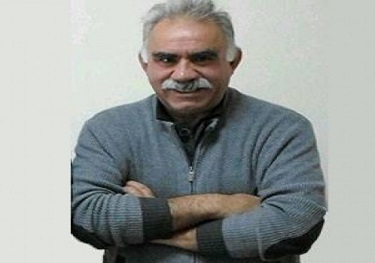
His isolation hasn’t stopped his influence, however. From prison, he’s written and published several political treatises outlining his ideology of “democratic confederalism,” which focuses on a form of grassroots democracy, his works popular among the Kurds. He is also reputable for making women’s liberation one of his group’s main goals, the PKK coining the term “Jin, jîyan, azadî (Women, Life, Freedom)” to highlight its belief that liberation cannot occur unless women become free. The People’s Democratic Union (PYD) is implementing these ideas in Rojava (Western Kurdistan) within the borders of Northern Syria. Additionally, protesters across the world have pushed for his release.
One particular group of protesters gathered around the White House in February of this year to demand Ocalan’s release, marking the 25th anniversary of his capture. The fact this protest occurred in the United States communicates a lot. Turkey is a strategic ally of the United States through the North Atlantic Trade Organization (NATO), hosting US military bases in its borders and even possessing nuclear weapons they received from the US. Due to this close cooperation, the United States listed the PKK as a terrorist group, thus assigning a criminal status to Ocalan. The protest highlighted this cooperation and how it affected Ocalan’s status in prison, on top of the terrorist status of the PKK not only in the United States but throughout the Western world.
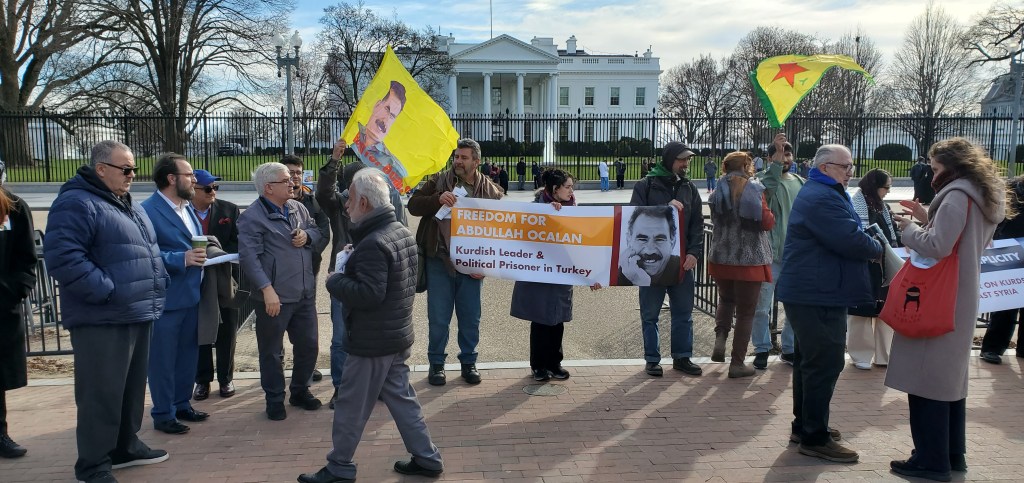
Despite imprisonment, Ocalan enjoys a large following, with many looking to him as a paragon for the rights of Kurds and human rights generally. This show of support for Abdullah Ocalan, despite his being in prison, creates an alluring persona that begs onlookers to ask who he is to the Kurds and how he became so significant in the Kurdish struggle today.
Early Life and Ideological Beginnings
Abdullah Ocalan was born in the village of Amara (Ömerli in Turkish), his birth registered in 1949. Per village customs of delaying the registration process a year or two after birth, his exact date of birth is unknown. This delay sometimes happened due to a lack of interest in federal formalities like this. Different groups of people lived in the village, consisting of Kurds, Armenians, and Turks: they all enjoyed good relations with each other, even being comfortable with intermarrying. Ocalan even claims his mother was Turkish, showcasing this favorable relationship between the different ethnicities.
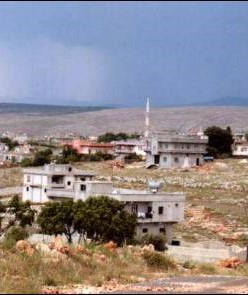
Although the ethnic variety was rich, Ocalan’s village was not. Like in most Kurdish villages, everyone worked for the local landowners, picking cotton in their fields, with very little income that could only afford minimal needs. French newspaper Le Monde’s report on a Kurdish village in the Mardin province highlights this poverty in Kurdistan. While the landowners lacked nothing of wealth, Le Monde reported that the villagers had a salary of around one to two US dollars an hour, 11-hour workdays. The villagers estimated that children were suffering a 30 percent mortality rate from child labor.
Much of Ocalan’s political thought would take root amid these impoverished conditions. He witnessed his family marrying off his sister, Havva, in an arranged marriage, which contributed to many of his feminist convictions that would develop later on. Ocalan also grew up going to school in another village, immersed in a Turkish curriculum that focused on Turkish identity and nationalism. Despite growing up in Kurdish culture, Ocalan spent this time identifying strongly with Turkishness, even desiring to become a Turkish military officer. His time as a federal desk clerk in the late 1960s in Istanbul, where he witnessed the surge in Kurdish and leftist movements, would shed light on this internal contradiction within him.
These influences on his life provided minimal certainty of his morality and how he should have defined his identity. Ocalan recalled in an interview how he felt guilt for Havva’s marriage, seeing arranged marriages as the end of women. This conviction also played into how he described his childhood in his book Beyond State, Power, and Violence, where he described his mother as “the last remnant of the millennium-old goddess culture that was going extinct and was at an impasse,” which he uses later in the book to describe his view of history as women once having a flourishing and influential culture evident in goddess cults throughout history that patriarchal deities would later eclipse. How he ties this observation into his later remarks about both the decay of feminine and Kurdish cultures in his childhood reveals a lack of foundation for his self-identity, where he states:
“Even if my mother had wanted to, there was no society that she could have passed on to me. Her society had long since disbanded… My father’s story was a little different but still largely similar. I have always considered the reality of my family as the most unassertive legacy of a disbanded, enervated, ancestral culture that grounded itself in the remnants of the clan cult. I was never inclined toward village society or the official state society that began with primary school, nor did I understand much of either.”
The later years, however, slowly gave him the answers to his confusion. The lessons he would gain from immersion into leftist political theory and the Kurdish movement would serve as a basis for his identity and his solution to the more significant issues of the Kurdish struggle.
Early Stages of the Kurdish Movement
The events surrounding Ocalan were an overwhelming swirl of political tension. The Turkish military overthrew the federal administration present in 1960, aided by the execution of the prime minister and two of his ministers, on top of the imprisonment of several Far-Right individuals. Due to this repression aimed at the political right, the Left was free to organize several political movements throughout the 1960s, particularly Turkish ones leaning towards Marxist-Lenist ideologies. The Kurds would also be involved in this political current, using variations of Kurdish identity and leftism to organize movements for political rights, followed by several arrests from police and the military.
The reason for these Kurdish movements was that in Turkey, the Kurdish language was criminalized, with even calling yourself a Kurd being illegal in the country. These movements aimed at increasing the political representation of Kurds to achieve cultural freedom and liberation from the Turkish regime.
Ocalan tried to be involved in some of these movements. In addition to developing a sense of his Kurdish identity, he identified intensely with socialism once he read The Alphabet of Socialism. He even began participating in leftist student movements at the universities in Istanbul, aligning himself with the leftist currents of the time.
Yet, rather than strictly following Kurdish nationalism or leftist politics, Ocalan’s political journey led him through both currents. Ocalan recounted that, while he primarily identified with the People’s Liberation Party-Front of Turkey (THKP-C), he began to pay more attention to the Revolutionary Workers’ and Peasants’ Party of Turkey, which included the Kurdish question more in its ideological aims. He even cites Deniz Gezmiş’s (leader of the People’s Liberation Army of Turkey) last words, declaring Turks and Kurds needing to work together based on liberty as an ideal required of the Kurdish movement to pay attention to.
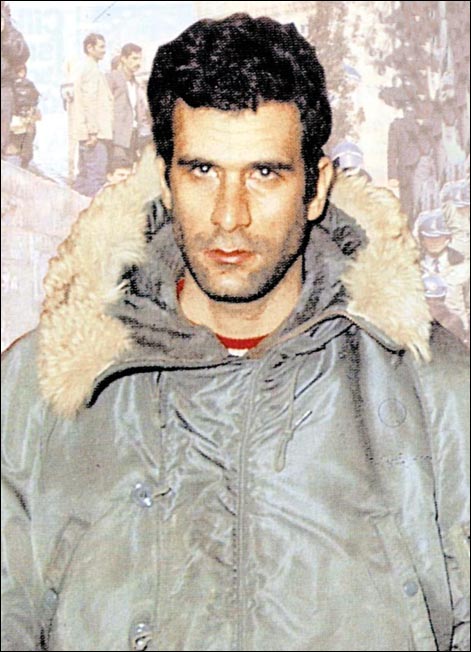
The hammer that would hit the nail on how he would approach these ideas came with his membership in the Revolutionary Eastern Culture Centers (DDKO) in 1970. These centers aimed to advocate for Kurdish culture by addressing the Kurdish struggle as one against both colonialism and nationalist oppression. The group’s goal was to cut off Turkish oppression of Kurdistan through the lens of revolutionary ideology meshed with Kurdish patriotism, though not necessarily needing to do so through achieving a nation-state of their own. In 1972, however, the Turkish government arrested all of the group’s leaders, disbanding the group. Ocalan ended up in prison for his membership in the group, later released for lack of evidence. After his release, Ocalan, along with other Kurdish nationalists, gathered to form a program for the Kurdish struggle in 1974.
Throughout his life until this moment, Ocalan witnessed cultural oppression, economic disparity, and the beginning of several movements to address these issues. These movements, however, were held back by their ideological flaws. The movements that exclusively focused on Kurdish nationalism weren’t able to keep up with the influx of leftist ideologies that many people were turning to as solutions to economic disparity and limits on democratic rights. At the same time, the leftist movements did not highlight the Kurdish question intensely, believing that it would be answered by simply focusing on solving economic issues. This focus led to the leftist movements being primarily Turkish ones, with Kurds and their matters left to the side. The DDKOs provided a potential answer to both of these movements by using leftist ideology to focus on the Kurdish cause primarily, but it was short-lived due to actions from the Turkish state.
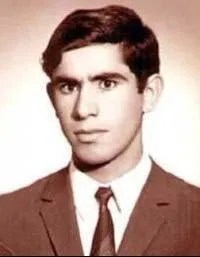
The first steps Ocalan and his group took began a long journey built on these experiences. Their direction was uncertain, but it slowly led to a movement that aimed to synthesize what came before while bringing a new solution to the Kurdish question.
PKK’s Forming Stages
Ocalan and the other Kurdish nationalists began their meetings in Tuzlucayir, a suburb of Ankara. Their main goal was to create a Marxist-Leninist group aimed at Kurdish independence via, initially, the nation-state model. The group would act independently from the Turkish left, primarily focusing on the Kurdish struggle. Provisionally, it called itself the National Liberation Party (UKO), implying its push for armed resistance against Turkey.
This ideological mixture nearly harkens back to the ideology of the DDKOs mentioned earlier, in that both Ocalan’s group and the DDKOs aimed leftist politics at Kurdish autonomy. However, how Ocalan and his group approached this mixture took on a new, yet not unrecognizable, identity of its own. According to Ocalan, although at this time they were still a Marxist-Leninist group, they described their socialism as “scientific socialism,” implying a focus on taking the overall ideals of socialism without also being so rigid that they weren’t open to new situations or discoveries that could hinder their goals.
The way they approached Kurdish identity was also unique. When the group ultimately developed into the PKK, its founding declaration stated that it was not just fighting for a Kurdish state but for a “Federation of the Middle East.” This declaration allowed the PKK to later develop into an organization that not only fought for the freedom of Kurds but also for the freedom of all people groups.
These nuanced characteristics both show a strength of the PKK that they would refine over time while also highlighting the ideological challenges in forming the PKK. Ocalan has mentioned that while they often discussed an “independent Kurdistan,” the group didn’t frequently mention the need for a state in their meetings. The issue of whether to adopt the model of “democratic socialism” (democracy with a focus on worker’s rights) or the “dictatorship of the proletariat” also created uncertain feelings among the group about whether these models would achieve liberation. After all, despite several states existing at the time primarily for worker’s rights, Ocalan and the others saw that there were still issues with achieving full equality for the proletariat in these countries. They saw the possibility that this problem would occur for the Kurds with the establishment of a Kurdish state. Thus, Ocalan details:
“All of this led us to intuitively feel that even though focusing on a separate state might be attractive, it would probably only create irresoluble problems for us. Moreover, the difficulties of founding a Kurdish state under the conditions in Turkey and the Middle East, combined with the new problems that would then ensue, made the issue even more delicate. As a result, instead of the ‘state,’ we preferred the concept of Kurdistan as the ‘homeland’- although its status was not all that clear. Even the main slogan we chose, an ‘independent, democratic, and socialist Kurdistan,’ included no direct reference to or preference for a state. It made perfect sense that in the end it would be concretized in the more realistic and revolutionary concept of a ‘free Kurdistan.’”
Despite these ideological nuances, many Kurds found the movement appealing and joined it. Ocalan’s group would organize one-on-one meetings with Kurds in Kurdistan, explaining their ideology and overall goals for armed resistance, with many people joining the movement after these meetings.
Not everyone in the Kurdish movement supported Ocalan’s plan. Many Kurds thought that Ocalan’s plan of armed resistance was too premature for what the Kurds were capable of at the time. Kemal Burkay, the leader of the Kurdistan Socialist Party, believed that Kurds needed political institutions before beginning resistance due to previous failures of the Kurds to carry out armed resistance in history. Kurdish activist Ahmet Zeki Okcuoglu, who worked with the Kurdish publishing house Kawa, believed that Ocalan didn’t know enough of Kurdish history to plan a movement for the Kurds properly.
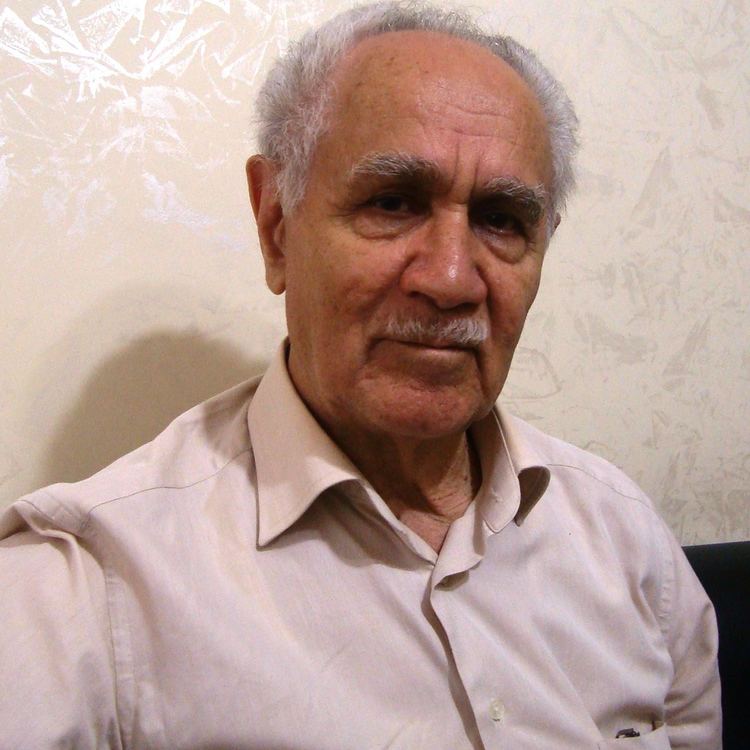
Ocalan’s lack of experience and connections also aroused criticism from other Kurdish activists towards him. Before starting his movement, Ocalan had limited revolutionary experience compared to other Kurdish leaders. Other than being in the DDKO for a brief time, Ocalan was not involved enough in the political movements of his day to establish a strong reputation as a leader in the eyes of more veteran activists. Additionally, while many Kurds gained influence through tribal connections via their families, like those in the DDKO and the Barzanis while fighting against the Iraqi regime, Ocalan did not come from a well-known or influential tribe, limiting his reputation among other Kurdish leaders in Turkey.
Ocalan was a wild card, coming out of nowhere. Because many did not know who he was, they met his movement with skepticism.
Rather than skidding to a halt, Ocalan’s movement still attracted ample support. His group’s straightforward call to action for the Kurds drew in many among the Kurdish youth, both poor and affluent. Rather than evaluating whether or not the Kurds were ready for armed struggle and proposing a multi-staged solution towards achieving it like other groups at the time, Ocalan and his group’s vision was simple: Turkey was oppressing Kurdistan, and it was time for the Kurds to fight back.
For Kurds anxious for a solution to their woes, Ocalan’s group was a beacon. University students, activists, villagers, and many more would see Ocalan’s vision as an answer to the Kurdish struggle. They saw this group as an answer to their calls for change in their time, growing the party’s capabilities with their membership.
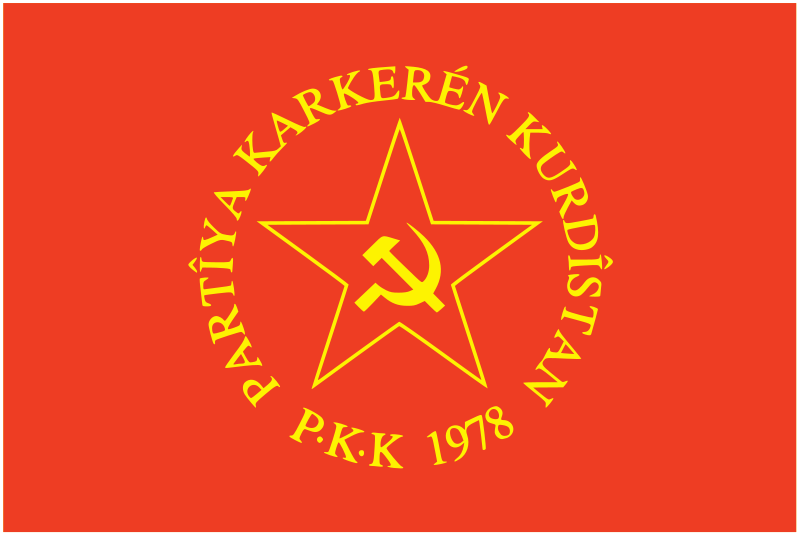
Ocalan and the other Kurdish nationalists with him would act on these promises for revolution, seeking weapons they could use to organize themselves for resistance. Once they could do so, the Kurdistan Workers’ Party was officially founded on November 27, 1978, anxious to work on their promise of revolution.
This is part one of a series of articles about Abdullah Ocalan. Read part 2 here!
Bibliography
Anderson, T. (2022, February 10). 23 years of isolation: An interview with Abdullah öcalan’s lawyer. Canary. https://www.thecanary.co/global/2022/02/10/23-years-of-isolation-an-interview-with-abdullah-ocalans-lawyer/
Council of Europe. (2019, May 21). Council of Europe anti-torture Committee publishes report on Imralı Prison (Turkey) – CPT – http://www.coe.int. CPT. https://www.coe.int/en/web/cpt/-/council-of-europe-anti-torture-committee-publishes-report-on-imral-prison-turkey-
Creamer, A. (2024, February 15). Kurdish prison writings after 25 years of extreme isolation on i̇mralı island. The London School of Economics and Political Science . https://blogs.lse.ac.uk/mec/2024/02/14/kurdish-prison-writings-after-25-years-of-extreme-isolation-on-imrali-island/
Marcus, A. (2009). Blood and belief: The PKK and the Kurdish fight for Independence. New York University Press ; Combined Academic distributor.
Öcalan, A. (2023). Beyond state, power, and violence. PM Press.
Turkey Overview. The Nuclear Threat Initiative. (2024, September 11). https://www.nti.org/analysis/articles/turkey-overview/
U.S. Department of State. (n.d.-a). Foreign Terrorist Organizations. U.S. Department of State. https://www.state.gov/foreign-terrorist-organizations/
U.S. Department of State. (n.d.-b). U.S. Relations With Turkey (Türkiye). U.S. Department of State. https://www.state.gov/u-s-relations-with-turkey/
Un urges Turkey to end isolation of i̇mralı prisoners, including Abdullah öcalan. Medya News. (2024, July 27). https://medyanews.net/un-urges-turkey-to-end-isolation-of-imrali-prisoners-including-abdullah-ocalan/
White, P. J. (2021). The PKK: Coming Down from the mountains. Zed Books.

 Dengê Çiyayên: Voice of the Mountains
Leave a comment