DISCLAIMER: This is part 2 of a series of articles about Abdullah Ocalan. To read part 1, please read here!
Into the Trenches
In the early 1970s, Ocalan and other Kurdish revolutionaries took the first steps toward building the Kurdistan Workers’ Party (PKK). Forming from the mixture of Kurdish nationalism and leftist politics at the time, their group’s straightforward goal of starting armed resistance for the Kurds gained them a large enough following to begin armed resistance. The illegal status of Kurdish identity amid the intense political turmoil of this time led to the Kurds flocking to Ocalan’s group as a beacon for achieving Kurdish autonomy. Formed by a desire for Kurdish liberation, the PKK officially started in 1978, with armed insurgency following afterward.
The PKK, while achieving general success initially, also came across different obstacles in their guerilla insurgency. These included issues ranging from military ones to ideological ones as well. Ocalan attempted to remedy these issues with varying methods, from forming new political institutions for the PKK to diplomatic attempts at peace with the Turkish government.
The ultimate result of these developments in the Kurdish movement led to a chain of events forever affecting Abdullah Ocalan and the Kurdish movement as a whole.
Armed Insurgency
After the PKK formed, its first action to announce its existence was the attempted assassination of Mehmet Celal Bucak, leader of the Bucak tribe, in 1979. Bucak was a Kurdish politician who worked closely with the Turkish government and was known for treating villagers under his authority with intense brutality.
During this time, many of the Kurdish tribal leaders worked closely with the Turkish government, often at the Kurds’ expense. These ties between the government and the tribal leaders caused many Kurds to view the tribal leadership in the same light as the Turkish state, another entity whose purpose was to limit the rights of Kurds.
The PKK’s targeting of Bucak strengthened their image as an armed group. The assassination attempt represented a breakaway from the Kurdish leadership and a significant challenge to the Turkish government, leading people to see the PKK as a symbol of Kurdish resistance. Despite the attempted assassination only wounding Bucak, this led to other successful attempts with other Kurdish tribal leaders, increasing faith in the PKK’s ability to fight amongst its supporters. Similar fighting would increase over time.

Around 1980, however, the Turkish state, via an informant from within the PKK, began to crack down on the movement. Due to this limitation on their activities, Ocalan negotiated with Damascus to set up bases for the PKK in Syria’s borders to help the PKK recuperate and provide weapon supplies. This agreement was beneficial to Syria since now, due to their tensions with Turkey, they could use the PKK as leverage towards Turkey should the need arise.
While in Syria, Ocalan was able to form connections with the Palestinian factions, the Popular Front for the Liberation of Palestine (PFLP) and the Democratic Front for the Liberation of Palestine (DFLP). These two groups would train PKK militias in Lebanon for guerilla warfare with the Turkish state. I have detailed this cooperation in my article about Kurdish ties with the Jews and Palestinians, which you can read more about here.
Once preparations were complete, the PKK fully began their armed insurgency against Turkish forces in 1984. Raids against police stations occurred in Colemêrg, killing several Turkish soldiers. From these incursions, the PKK made their presence known in the region, increasing their reputation as a force for the Kurdish movement. In response, however, the Turkish military burned down forests in Kurdistan and demolished around 3,000 villages there, resulting in millions of Kurds fleeing the region. Turkey also increased its activities against the guerilla movement, killing several PKK militants and capturing them for imprisonment to endure brutal treatment in federal hands.
Countering these attacks, the PKK expanded its strength by further developing its armed forces into the People’s Liberation Army of Kurdistan (Artêşa Rizgariya Gelê Kurdistan, ARGK) in 1986. This development shifted further to focus on armed resistance to achieve Kurdish liberation.
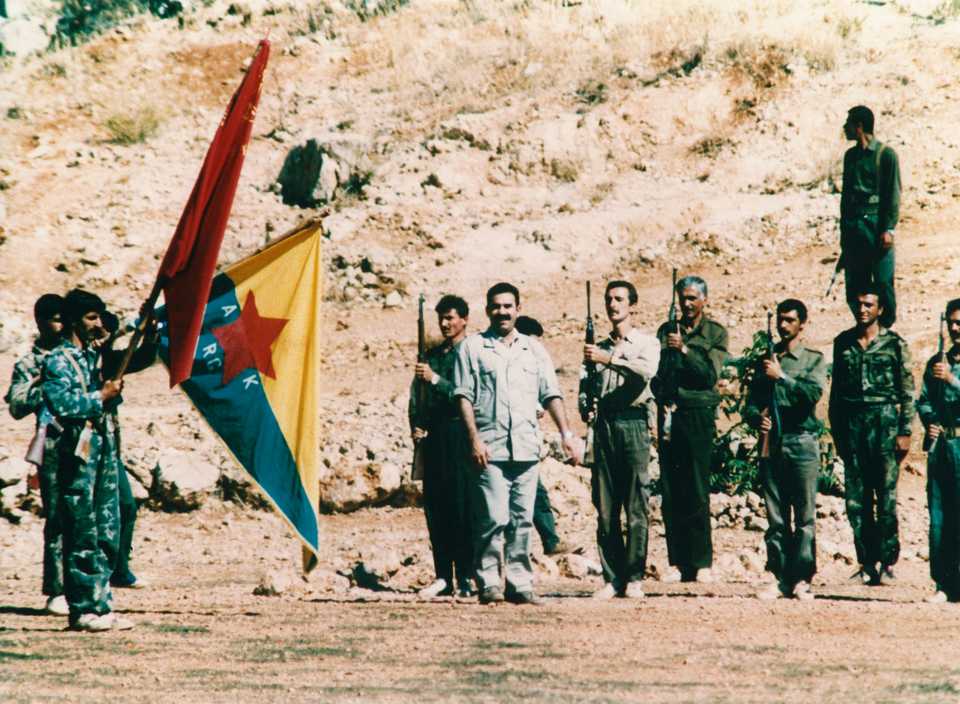
The ARGK’s strength and image grew into the late 1980s, with an increase in numbers and an established influence over the local populations of Kurdistan. For instance, the ARGK was able to establish PKK militias in the villages they controlled, and they were even able to have their units stationed in many villages for extended periods. They also began more intensified attacks against Turkish military units, with the intensity of the attacks further growing into the 90s. With Turkey unable to stop PKK attacks from occurring and the growing loyalty to the group among the Kurds, hopes were so high for the movement that even Cemil Bayik, one of the top commanders in the PKK, stated in 1998, “President Apo has explained on various occasions that it is quite possible that the Kurds will be able to claim a peace for themselves by the year 2000, and we are convinced that this can be achieved.”
The reality was much more complex. In the conflict, neither the military nor the PKK could overcome the other. The PKK was unable to overcome the Turkish military’s massive force, while the military was unable to bring this strength to the mountainous terrain that the Kurdish guerillas made ample use of. There was no end in sight for the conflict, with the Kurds in the region fleeing the conflict and being forced from their homes both by the overall conflict and more heavily by the Turkish military through their actions described previously.
The situation caused Ocalan to rethink the group’s priorities at this time. Although there was some leeway for change in the group’s goals from their nuanced ideology, from the beginning, the PKK’s main goal was to liberate Kurdistan along nation-state lines through armed resistance against the Turkish state. These goals created support among the Kurds, with them seeing the group as the one that would achieve this. The Kurds looked to them as their vanguard, but now this stalemate and the cost of human life that came with it was causing Ocalan to reconsider the group’s direction.
The Kurds would not achieve autonomy solely through force; it also had to be reached politically. The PKK needed to be willing to negotiate with Turkey to achieve Kurdish rights. The group also needed to prepare to function towards a political solution in its institutions within the movement rather than investing all of its energy into the PKK’s military capabilities as they did with ARGK. In his political treatises following his later imprisonment, Ocalan reflected:
“We probably couldn’t have attained state power, but that wasn’t really something we had planned for. But we could easily have reached a democratic solution, and we could have done so without very many losses or much suffering on either side… It is clear that neither the state nor the PKK won. In fact, both suffered heavy losses…”
To reach this democratic solution during the fighting, Ocalan attempted negotiations with the Turkish government. Opportunities arose in the 1990s that he made every effort to take advantage of. He would also create political developments in the PKK itself to prepare for civil functions, particularly with the PKK’s governing structure.
Peace Negotiations and Political Developments
Before negotiations began with the Turkish state, there was already some room for the PKK to prepare for a peaceful solution to the Kurdish question. Ocalan’s attraction to the idea of Turkish-Kurdish unity still somewhat carried on in the PKK’s policies, where they were slightly open to the idea of cooperating with Turks if it helped pave the way for the achievement of Kurdish rights even while the PKK began to focus on armed resistance against Turkey more intensely. Traces of this were visible in Ocalan’s remarks towards Turkey in 1988: “We believe that there is no problem we have with the Turkish people that we cannot solve.” An opportunity to achieve this peace arose when Turgut Ozal became the President of Turkey.
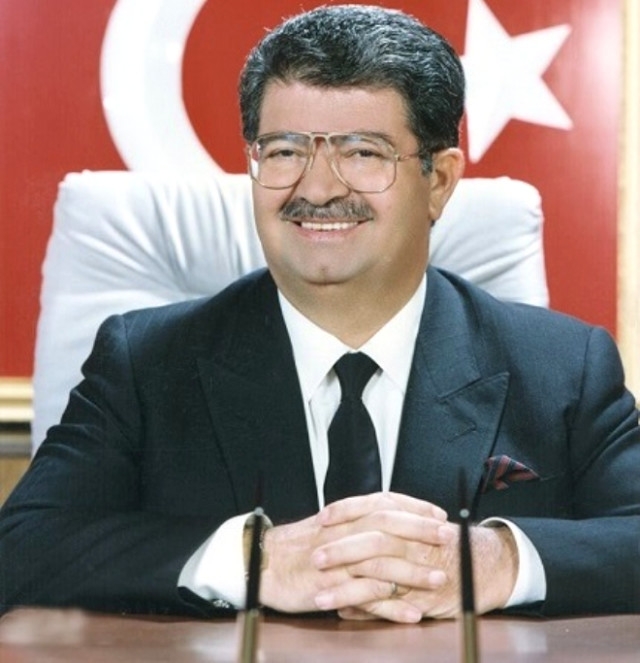
Turgut Ozal was infamous for his more liberal agenda in government, which contrasted with the more authoritarian elements of the Turkish government at the time. Particularly important for the PKK’s interests, Ozal took several steps toward opening the door to a peace agreement. In the early 1990s, he ended the ban on the Kurdish language present at the time. He also led the Turkish government to work more closely with the Kurds in Southern Kurdistan (Northern Iraq), where the Kurds had established more autonomy, contrasting with the norms of the Turkish government up to that point. Ozal even publicly stated he might have a Kurdish heritage and often criticized the government for its silence around the Kurdish question.
With all of these actions in support of the Kurds, Ocalan was hopeful that a peace agreement could come about. In March 1993, Ocalan declared a ceasefire to communicate his desire for talks and promised that the protests for the upcoming Kurdish New Year, Newroz, would be peaceful instead of filled with the violent pogroms that usually came with the celebration in Turkish borders. Ocalan then made later steps through intermediaries to reach out to Ozal for negotiations.
To prepare for the PKK to function politically should peace be achieved, Ocalan also began organizing the PKK’s governing structure along democratic lines. In 1992, Ocalan started to organize a national assembly where Kurds could vote for delegates. He would invite other prominent Kurdish activists to participate in the assembly elections and discuss laws for the assembly to enforce. During this time, Ocalan also allowed women in the PKK to organize a congress for women, paving the way for them to start the Kurdistan Women’s Freedom Movement (Tevgera Jinen Azadiya Kurdistan, TJAK) in 1995, where they would elect women to represent them in the congress.
These steps were significant because, up to this point, the PKK had been operating under a Marxist-Leninist paradigm, with Abdullah Ocalan as the foremost leader with ultimate authority over the group. With these changes, however, he was now willing to create a system allowing others to be empowered, not just himself. Not only this, but it also paved a potential path for the PKK to gain a reputation not just as rebels but as legitimate political actors.
Ocalan hoped this would increase the chances of a lasting peace agreement between the Kurds and Turkey. Other setbacks would occur that blocked this opportunity.
While Ocalan tried to raise Ozal’s attention through his ceasefire announcement, Ozal did not respond. Due to the strong desire of the rest of the government to continue fighting the PKK, Ozal could not say outright that he was in favor of the ceasefire. He and Ocalan communicated only indirectly through intermediaries, with Ocalan assuring that the ceasefire would continue. Ozal even complained about the government’s unwillingness to negotiate with the PKK, saying to a journalist, “Because of these pompous fools, a very important opportunity will be lost,” referring to the Turkish government at the time.
Regardless of Ozal’s desire for negotiations, the peace process would be over soon: Ozal died of a heart attack in April 1993. What soon followed was a military that was now loose from Ozal’s diplomatic policies. The military killed a dozen rebels close to Kulp, leading to an escalation in the conflict to rise again. The following years afterward would witness further violent exchanges between the PKK and the military before culminating in the most significant blow to Ocalan and the PKK.
Ocalan: A Man Without a Country
Starting in 1994, the Turkish military’s aggression increased, not only in manpower but also in tactics. Before, the PKK maintained the fight by receiving supplies from the villages where they had troops present. Now, the military was emptying the villages, forcing residents to leave their homes and blocking roads to limit the flow of supplies to the guerillas. The first village where they implemented this tactic was Lice, where they fired at all residential buildings, killing 30 and wounding 100; the rest of the village fled afterward. On top of their tactic of emptying villages, the Turkish military also began implementing guerilla tactics of their own where they could corner the guerillas, traversing mountain ranges they couldn’t before. The guerillas suffered many casualties from these attacks, with the lack of supplies hurting their ability to fight and the newfound confidence of the military.
Due to these new limitations on the PKK, many guerillas had to flee to their main bases in Iraq for safety. Soon afterward, Ocalan would have to flee as well.
In the late 90s, Turkey began pressuring Syria to give up Ocalan and the PKK bases within its borders. Syria, fearful of a Turkish incursion, started to pressure Ocalan and the PKK to leave. Ocalan recounted in an interview that Syria even threatened to arrest him and send him to Turkey if they didn’t go. Thus, Ocalan and the rest of the PKK in Syria fled Syria in October 1998, with Ocalan seeking different countries that would potentially grant him asylum.
He didn’t have much luck. He first tried to seek asylum in Greece due to the country’s sympathy for the PKK, only to be driven out by them once he got to the airport. Greece gave him 3 hours to leave. Ocalan then flew to Moscow to apply for asylum, but Russia turned him down when Turkey learned of his whereabouts in the country. Russia did not want to risk Turkey fighting the country with Ocalan in their borders.
Ocalan could temporarily stay in Italy with the help of the Italian Communist Party, but he was still uneasy about staying. Italy only allowed him entry into the country, contrasting with complete asylum. Additionally, the United States voiced concern to Italy, attempting to convince the government not to give Ocalan asylum. Even the rest of Europe didn’t want to take Ocalan in, concerned over Turkey’s response if they did so. Ocalan’s status as a terrorist throughout the US and Europe was too much of a deterrent to any success in his attempts at asylum.
At the start of the Cold War between the US and the Soviet Union, in 1949, the US and Western Europe formed the North Atlantic Trade Organization (NATO) as a bulwark against the Russians. Turkey became a member of NATO shortly afterward. NATO’s stated purpose is to ensure security cooperation between its member countries against countries or groups it considers threats to their security, such as Russia or China, in the name of democracy and human rights. They detail this further on their website, stating:
“NATO strives to secure a lasting peace in Europe and North America, based on its member countries’ common values of individual liberty, democracy, human rights and the rule of law… The principle of collective defense – meaning that an attack against one Ally is considered as an attack against all Allies – is at the heart of NATO.”
The “principle of collective defense” means that if a member country considers anyone a threat to its national interests and security, the other members will follow suit and consider them a danger for the sake of ties with that country. Also, on paper, the member countries must do this in the name of democratic values. For example, if Ukraine, a democratic country, were an official member of NATO rather than simply a partner to it, NATO would completely support Ukraine in its defense against aggression from Russia (a totalitarian government), rather than this support shifting between the interests of the changing leadership in their countries. A democratic alliance against a totalitarian world, plain and simple!
This alliance becomes more complicated with countries like Turkey. In the early 1900s, out of the ashes of the Ottoman Empire and at the height of World War I, Mustafa Kemal Ataturk founded the Turkish Republic of modern-day Turkey. Ataturk founded the republic based on a nationalist Turkish identity, where the Republic’s main prerogative was to preserve Turkish identity, even if it meant limiting the rights of other people groups within Turkey’s borders. While fighting against the British and other powers in World War I, he used the war as a pretense to massacre the Greeks in Turkey in the early 1920s, his army burning several Greek villages and churches. His army also massacred Armenians in many Armenian cities like Marash and Hajen in 1920, leaving only room for Turkish rule in the region and no one else.
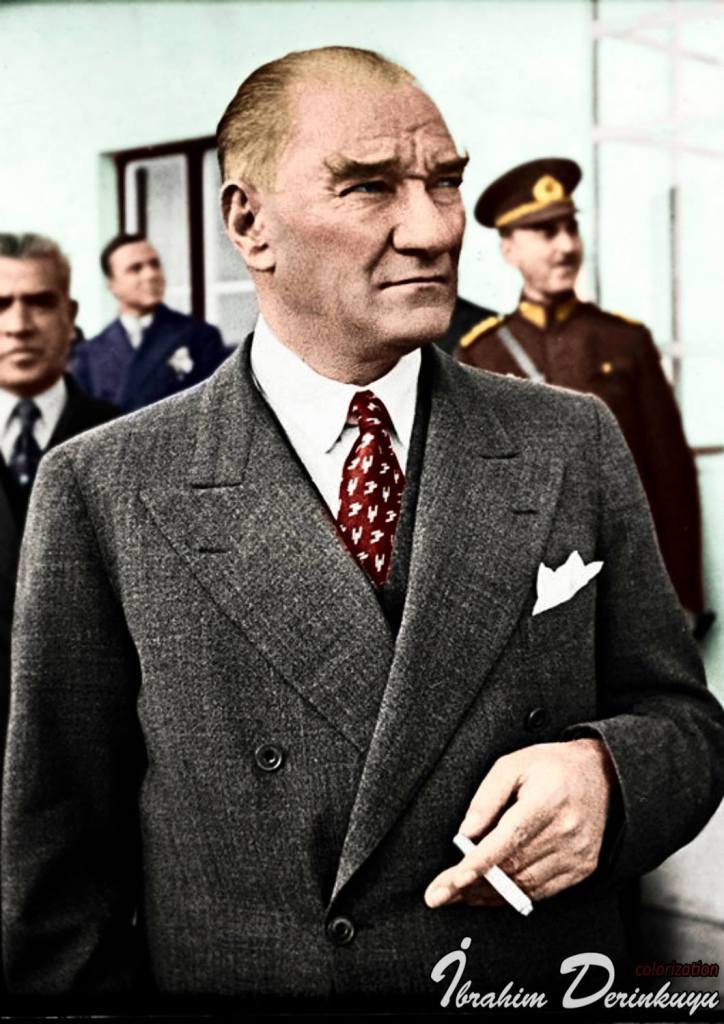
The Kurds wouldn’t escape his brutality, either. Initially, at the start of World War I, Ataturk promised the Kurds their province under the Turkish Republic if they helped him fight in the war as support. Many of the Kurdish leaders agreed and fought for him, only for the Turks to betray their rights after the war was over. Ataturk criminalized the Kurdish language and barred Kurds from participating in politics under his government. Other massacres against the Kurds would follow.
The ideological basis for these actions is best evident in Ataturk’s comments on “Wilsonian Principles,” a set of general rules that US President Woodrow Wilson set up that outlined general principles that would allow all people groups to live peacefully with their own countries via treaties established between nations. Showing a preference for armed force instead, Ataturk stated:
“I confess that I also tried to define the national border somewhat according to the humanitarian purposes of Wilson’s principles… But let me make clear at once: On the basis of these humanitarian principles, I defended boundaries which Turkish bayonets had already defended and laid down. Poor Wilson, he did not understand that lines which are not defended by the bayonet, by force, by honor and dignity, cannot be defended on any other principle.”
His later remarks would show this principle of force was not limited to self-defense, stating that, with Anatolia, he “had to conquer its people,” referring to his actions towards Armenians and Greeks in the 1920s.
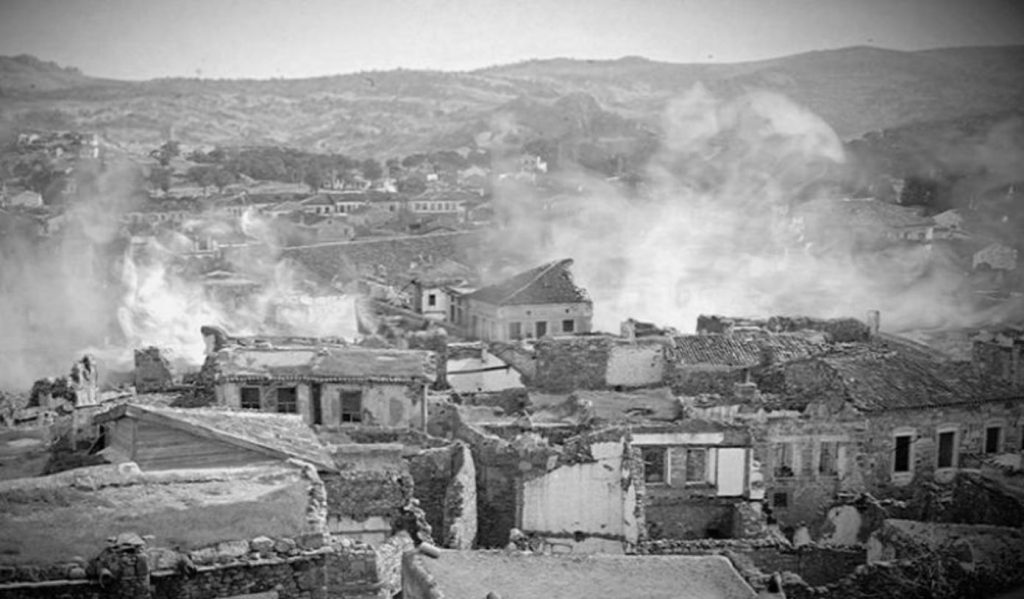
Despite this legacy of genocide in the Turkish Republic, NATO accepted Turkey as a member of NATO in 1952. Turkey’s military was one of the strongest in the world at that time. With the Soviet Union’s involvement in the Middle East, NATO needed an ally to secure the region’s influence and serve as a bulwark against the Soviets. Turkey was able to fill that role for the West, hosting US military bases and weapons in its borders, even sending soldiers to aid the United States in the Korean War around 1953. Through NATO connections, Turkey also profited from sending foreign labor to Germany in the 1960s, starting an economic trend between the two countries in the coming years. The benefits of cooperation Turkey and NATO allies reaped from these ties continue today, with the US still trusting Turkey with US weapons, on top of maintaining US military bases in the region. Germany actively trades with Turkey, with bilateral trade reaching a record high of 55 billion euros (over 60 billion US dollars) between the two countries in 2023.
Turkey’s racist policies and NATO countries’ intensive cooperation with the country would highlight a contradiction between the democratic values the alliance claimed to follow and its value of also defending any threat against its allies. Turkey still actively suppressed Kurds during the Cold War, limiting their political participation and criminalizing their culture, yet was still one of NATO’s essential partners. When the PKK began its fight against Turkey to achieve Kurdish representation, Turkey, still insisting on its policy of criminalizing Kurdish identity, listed them as a terrorist group. While fighting the PKK, they would commit atrocities towards Kurdish villages and place the blame on the PKK for it, such as the Turkish military killing 26 villagers in Van on July 12, 1993. Due to Turkey’s insistence on the PKK being a threat to its national security rather than as a response to its cultural genocide towards Kurds, NATO allies followed suit and listed the group as well to maintain military and economic ties. The US and Europe took security and financial concerns over democratic values in this situation.
This terrorist designation prevented Ocalan from finding a safe place to carry out his activities further. Driven out of Syria and denied asylum by Europe, Ocalan was left adrift in uncertainty, with no place to take root and continue his leadership tasks. Up to this point, he led the PKK in an armed struggle with Turkey, and the Western world opposed him in various ways. Now, he was thrown at the feet of the very countries calling him a terrorist, with no foreseeable way out.
His time seeking asylum was not without fruit, however. While he was in Italy, many journalists and political activists sympathetic to him contacted him and were able to spread the word about the Kurdish struggle. He was able to establish sympathy for the Kurds through this, with even Turkish analysts at the time lamenting it would have been better if he remained in Syria and remained isolated from the rest of the world.
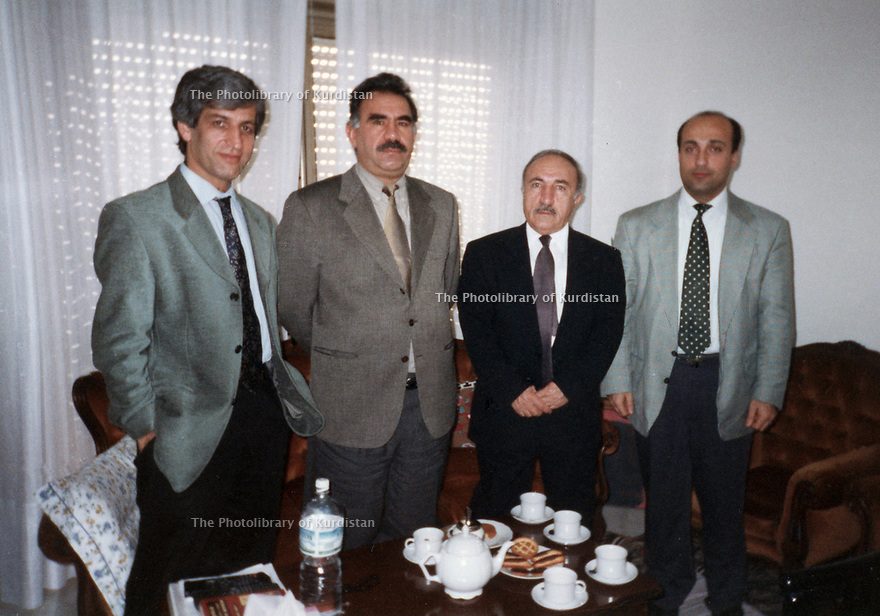
His travels at this time also gave him insight into the inner workings of state structures. Observing the correlation between Turkey’s NATO ties and the US and Europe’s decision to deny him asylum, much less entry in some cases, he saw how democracies tied to state structures created a contradiction with the very democratic values they espoused. Due to these states building their democracies on top of the accumulation of authority and power, in this situation via military and economic influence, the US and Europe were accommodating Turkey’s militarization to maintain a military ally in the Middle East for their interests. With Turkey’s blacklisting of Ocalan, these countries appealed to Turkey and limited Ocalan’s movement for the Turkish Republic’s sake. Thus, the West ignored, or at least minimally condemned, Turkey’s violence and oppression towards Kurds.
From Ocalan’s perspective, this power dynamic didn’t guarantee democracy; it limited it. With these ties, the rights of the Kurds were limited, and the democratic values of the West were limited in who had access to them. This limitation was most evident to him when the West denied him asylum in the countries he visited. In his writings, Ocalan later reflected on this journey, stating, “My three-month peregrination between Athens, Moscow and Rome was not without value, though. This adventure led me to understand the essence of capitalist modernity- the basis on which this defense is built- despite its many masks and disguises.”
This power dynamic would soon twist its knife on Ocalan. After leaving Italy and attempting to find a more definite guarantee of asylum across several countries, Ocalan eventually ended up in Kenya to apply for asylum. However, Turkey had other plans for him. Unbeknownst to Ocalan, the government organized a car with Kenyan police to pick Ocalan up from his place of residence, bringing him to a plane they had arranged for his capture. In February 1999, Turkish agents took him into custody, restraining and gagging him, followed up with sedation. When Ocalan woke up on the plane, the agents said, “Abdullah Ocalan, welcome home.”
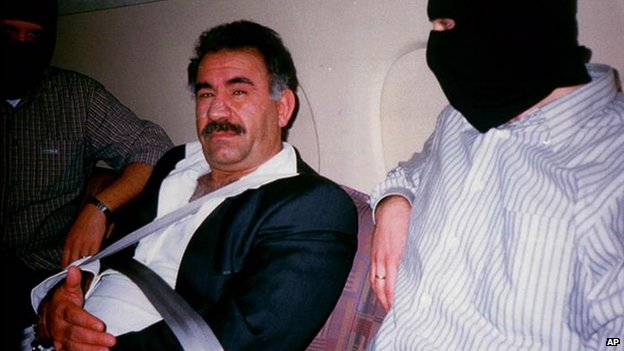
What followed later would shake the Kurdish nation to its core. Ocalan’s capture would follow a surge of unrest from the Kurds. The PKK would have no choice but to reframe its plan for resistance in a way where the direction of the Kurdish movement would traverse into unknown territory. With this capture, Ocalan went from leading the PKK into a struggle that brought the Kurdish question to light, only to end up at the hands of those seeking his end.
The Kurds would need to withstand their hopes of autonomy diminishing for a time, disappointed with their progress up to this point potentially being grounded to a halt.
Part 3 of this series is coming soon!
Bibliography
Administrator. (n.d.). A general overview of the Greek Genocide. Greek Genocide Resource Center. https://www.greek-genocide.net/index.php/overview
Aktürk, Ş. (2006). Turkey’s Special Relationship with Germany and Russia. Insight Turkey, 8(4), 7–14. http://www.jstor.org/stable/26328645
Ataturk, Mustafa Kemal. Armenian National Institute. (n.d.). https://www.armenian-genocide.org/kemal.html
Bengio, O. (2017). Turkey’s Kurdish Dilemmas. In The Kurds in a Volatile Middle East (pp. 24–32). Begin-Sadat Center for Strategic Studies. http://www.jstor.org/stable/resrep04759.8
Germany and Turkey: Bilateral relations. German Federal Foreign Office. (2024, February 26). https://www.auswaertiges-amt.de/en/aussenpolitik/laenderinformationen/tuerkei-node/turkey/228290
Marcus, A. (2009). Blood and belief: The PKK and the Kurdish fight for Independence. New York University Press ; Combined Academic distributor.
NATO’s purpose. NATO. (2024, May 29). https://www.nato.int/cps/en/natohq/topics_68144.htm
Öcalan, A. (2015). Manifesto for a Democratic civilization. volume 1, Civilization: The age of masked gods and disguised Kings. New Compass Press.
Öcalan, A. (2020). The Sociology of Freedom: Manifesto of the Democratic Civilization, volume III. PM Press.
Öcalan, A. (2023). Beyond state, power, and violence. PM Press.
Pearson, W. R., & Burwell, F. G. (2008). TURKEY AND NATO: NEW IMAGES AND OLD QUESTIONS. In THE EVOLUTION OF u.s.-tURKISH rELATIONS IN A TRANSATLANTIC CONTEXT (pp. 61–74). Strategic Studies Institute, US Army War College. http://www.jstor.org/stable/resrep12097.8
Rustow, D. A. (1968). Atatürk as Founder of a State. Daedalus, 97(3), 793–828. http://www.jstor.org/stable/20023842
Ter-Matevosyan, V. (2015). Turkish Experience with Totalitarianism and Fascism: Tracing the Intellectual Origins. Iran & the Caucasus, 19(4), 387–401. http://www.jstor.org/stable/43899215
Valentini, R. (2017, December 19). United States Cold War Operations In Turkey. History 118 US History Since 1877. https://blogs.dickinson.edu/hist-118pinsker/author/valentir/White, P. J. (2021). The PKK: Coming Down from the mountains. Zed Books.

 Dengê Çiyayên: Voice of the Mountains
Leave a reply to Abdullah Ocalan: His Life and Legacy – Dengê Çiyayên: Voice of the Mountains Cancel reply